


Welcome to Region 09 – the North
Hello from the Association of Open University Graduates in the North. Region 09 is a large Region from the East to the West coast of England and from Yorkshire to the Scottish Borders. There are large cities and towns such as Newcastle, Sunderland, Middlesbrough and Darlington, the counties Durham, Northumberland and Cumbria and Tees Valley. (Cleveland) Thus it is rural and urban in character.
I live in Newcastle upon Tyne, and have worked in most of the areas mentioned and have relatives in the areas too. During the pandemic, face-to-face meetings had to stop and so we developed Zoom meetings instead. These opened up the possibility of involvement to many more members as not only could members with mobility issues or family commitments now join in, but members from further afield in other geographical areas, also had the opportunity.
If you have any ideas for face-to-face activities or topics to discuss by Zoom, please contact me, Violet Rook, by email or phone.
We welcome members from the Region and beyond in the promotion of the AOUG and The Open University both now and in the future.
Executive Representative: Violet Rook – 07927671127
Email: violetrook@btinternet.com

Previous Events

The Sill is in the heart of the Northumberland National Park in wild lovely countryside and had something for everyone. AOUG members were nicely surprised when arriving at the fairly new building to find a café, a display area which is really a small permanent natural history museum and of course a shop. It was so light and spacious. On visiting the Sill members were keen to return, especially when thety realised that one can use the lift to go upstairs to see the grass roof and stand and view the Roman Wall which wonders into the distance. One can pretend to be a roman soldier standing guard surveying the scene. Attached to the main building there is a Youth Hostel and also a pub just along the road.
The Roman Army Museum is many miles from the big city of Newcastle and Hexham is also quite a few miles away. Thus members had not been familiar with the interactive displays it had to offer. It was set back from the main road on the way to Walltown and is a place which one could imagine was wild and rugged at the time of the roman invasion and the Roman Wall being built. There were huge displays of soldiers on horseback, descriptions of the life of the soldiers which really make their discomforts clear. But after viewing all of this we all sat down and had a cup of tea and a chat before heading home.
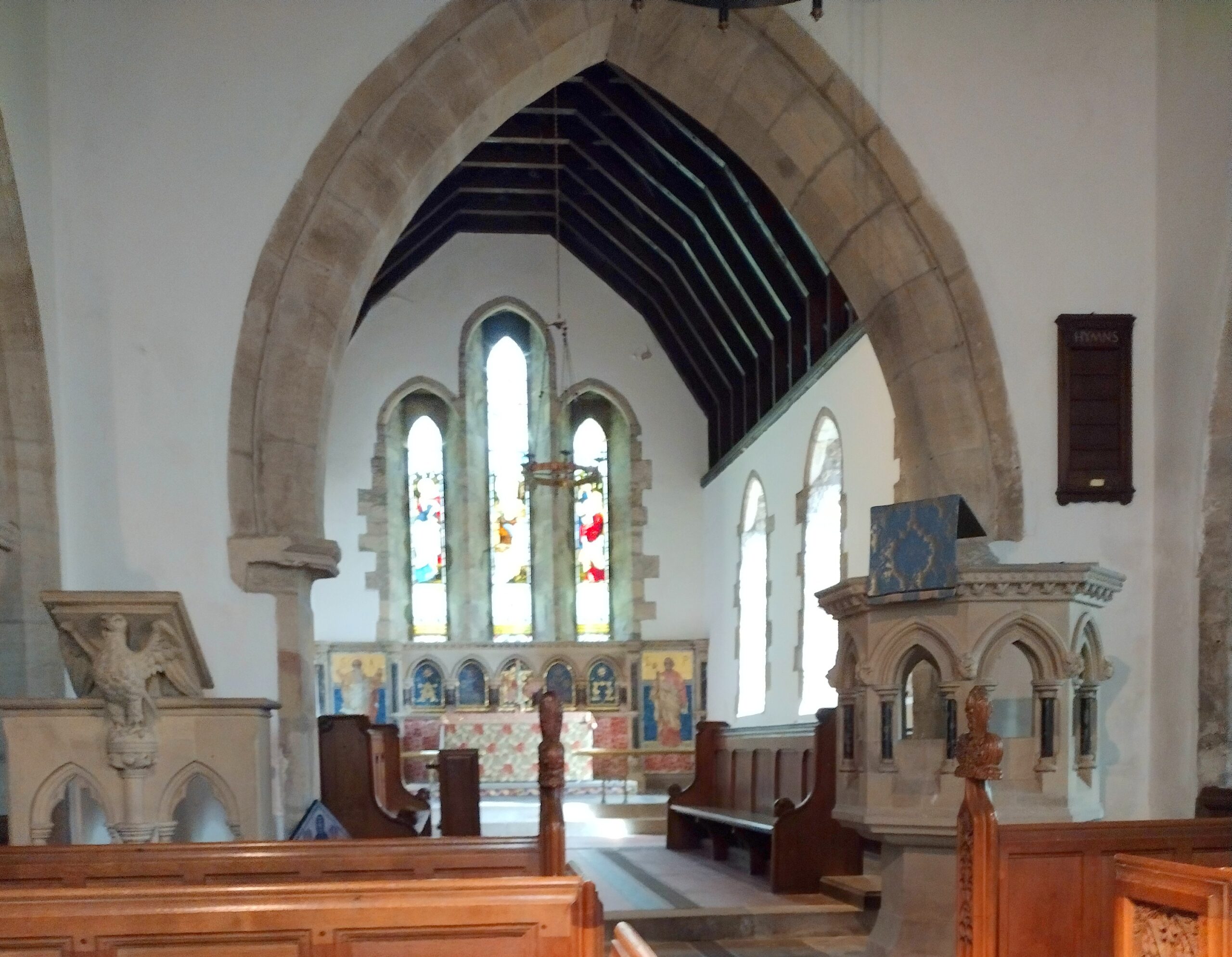
On the way to Chesters Roman Fort, one of our excursions to the Roman Wall, is an ancient church in Northumberland. This is the church of St. Andrews Bywell. The church contained roman stones near the font and had a connection with King John II of Scotland, who was a Balliol, the family after whom the Oxford University college is named. There are two churches side by side. St. Peters and St. Andrews. The reasons for the two churches was because there were two landowners, the Bolbec and Balliol families who owned the area on which the churches stood, so two different parishes. St. Andrews was built in the 12th Century and added to over the centuries with a small renovation in the 19th Century.
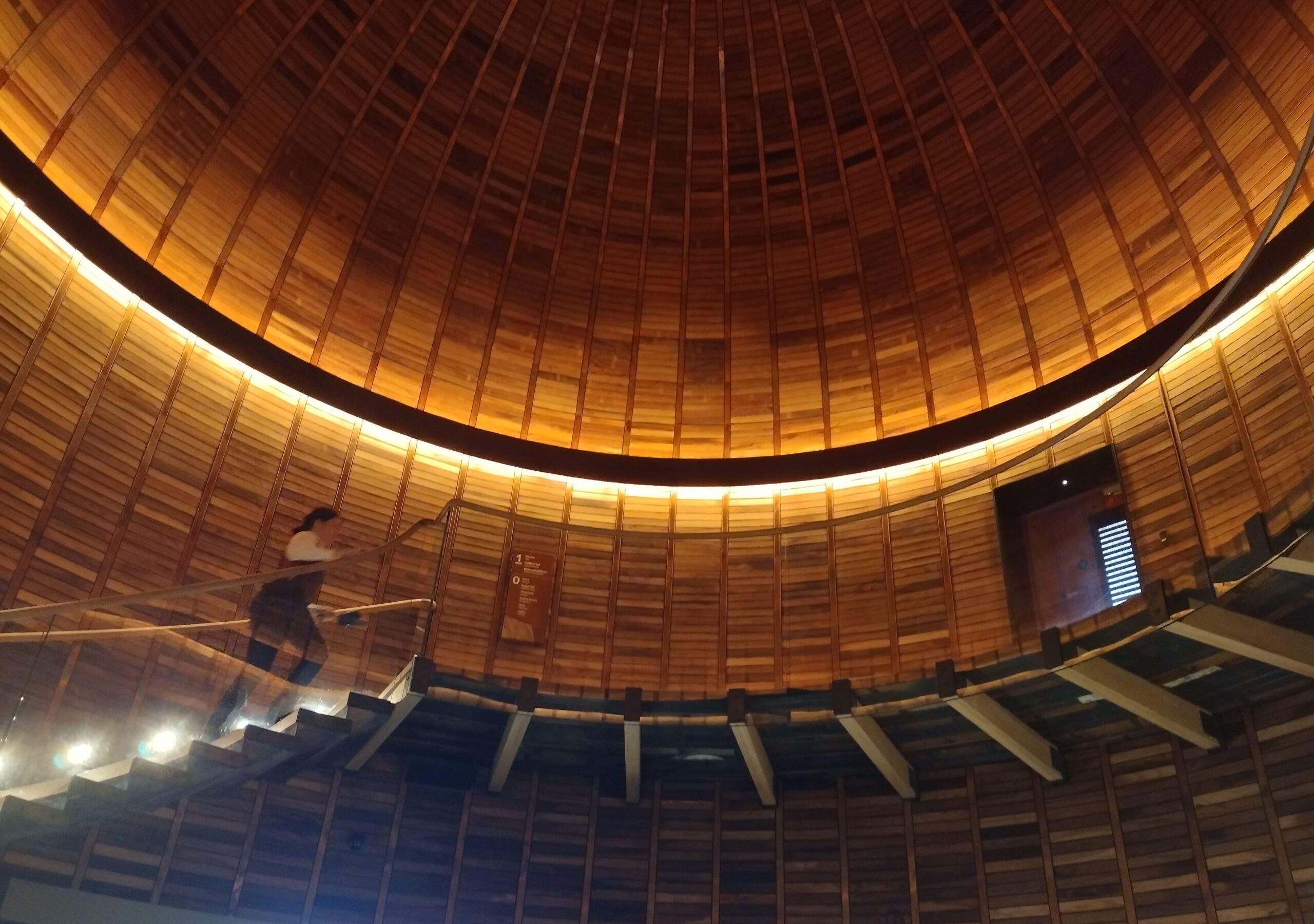
Our group visited Ad Gefin in Wooler Northumberland. Wooler is in the north of the county not that far from the Scottish border. It is one of the gateways to the Northumberland National Park. The building is a museum and a distillery. It is a very modern building, but the site is very ancient. On the ground floor there was the shop for souvenirs, plus a rather comfortable café with lots of choice from coffee and cake to a full course meal. Then there was the staircase to climb up to the museum via the circular staircase to that wonderful ceiling. The location had great appeal to the Anglo-Saxon kings and queens, and they decided to locate their Summer palace there. The building was named ‘Ad Gefin’, meaning ‘by the hill of the goats’. Now four miles east of the royal palace, in the market town of Wooler, is the new £16 million Anglo-Saxon museum and whisky distillery. On the visit it was fascinating to look up to the barrel-like ceiling built with ninety-three thousand wood panels. The Great Hall is the same width as the original palace that once stood at Yeavering. It was exciting to see a forty-minute audiovisual display imagining the life in the royal court.

This is a popular destination for members since it can be reached from Newcastle and from other towns in the area, but only by car. The bus service, as with many rural areas, is only twice a day. It is best to visit during the Summer months. On one occasion when travelling to the venue, there was a snowstorm and the visit had to be abandoned. The village is about twenty five miles from the Scottish Border and about the same distance from Newcastle, surrounded by lovely scenery.
The history of the mill is shown at the entrance where one can see old looms and even a sheep inside when proceeding to the cafe. The saying ‘on tender hooks’ is illustrated via a machine on show used for when wool was refined. The Mill is famous for making and sending to the royal family a woolen cot blanket for the then Princess Elizabeth in 1926.

It was a great pleasure for individuals to see the Lindisfarne Gospels when they returned to the North East on loan fron the British Library. I had seen them when I was a child on a school visit to the Monks Dormitory at Durham Cathedral and it was marvellous to repeat the experience.
The Gospels show the hard work of the monks who wrote them. Lindisfarne is an island, known as Holy Island, off the coast of Northumberland. Here St Cuthbert lived and died and was then transported by the monks around the country and beyond to find a safe burial ground for their beloved saint. They decided on Durham and that was the foundation of Durham Cathedral, high on a hill surrounded by the River Wear